Lift-the-flap Periodic Table

DSC_0594

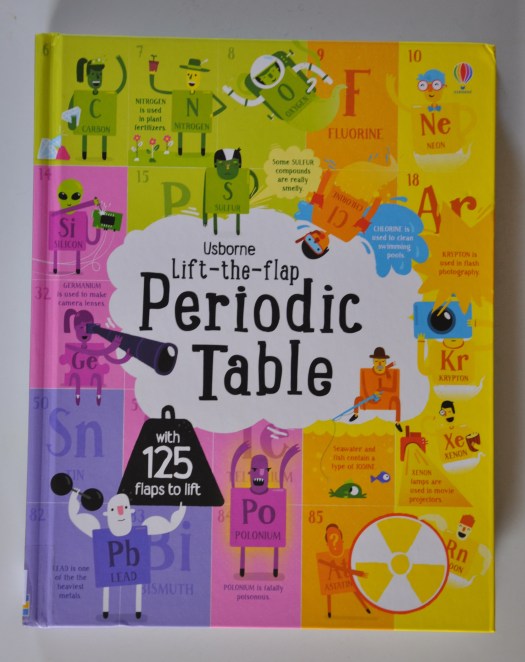
This morning, rushing to get out of the door as usual, I turn around and realise that Daughter is still in her nightclothes – stood with bags and coat in hand and utterly absorbed by the Usbourne Lift-the-flap Periodic Table book. Though she had completely forgotten to get dressed, she could now tell me – with no prior chemistry knowledge – that water was a compound of two elements.

All things considered, I’m going to call that a win.

It’s easy to see why Daughter was so focused on the book – it’s brightly coloured, easy to understand and who doesn’t love an informative flap?

dsc_0597.jpg

Information is broken down into small, manageable chunks and is presented in such a way that chemistry – a subject that even my nerdy teenage self couldn’t stomach for its dryness – is not only interesting, but compelling.

DSC_0596

This book strikes the ideal balance between fun and fact – it’s interesting without being heavy and fun without being patronising. For any child with even a passing interest in science, it’s a very worthwhile investment.

Which are your favourite science books for children?

Farn ❤

Odd and the Frost Giants, by Neil Gaiman and Chris Riddell

UPDATE: 

I no longer feel comfortable recommending this book on account of the allegations made against Gaiman (you can read about it here). 

Being completely honest, I’m not sure whether I should leave this review up. I believe in transparency – I loved the work when it came out, as evidenced below – but by admitting that, I worry that I’m supporting the author and so condoning his behaviour. 

There’s been so much talk in recent years about separating art from artist and while I think – to a degree – we can do that for artists who are no longer living, it’s harder when they’re still alive to benefit financially from their work. Living, as we do, in a capitalist culture, money grants power, and I can’t in good conscience be a part of that. 

I would love to hear any thoughts you might have on this, but for now, I will leave the review and this addendum up in the hope that it encourages others to think critically about people they have admired. ❤
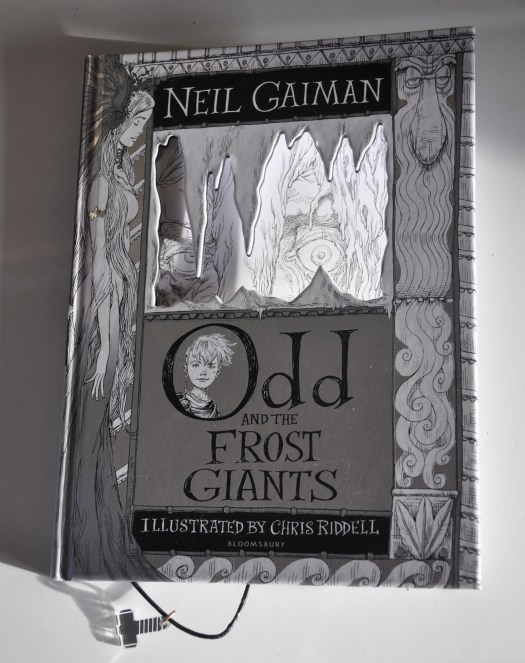
odd2.jpg

One for slightly older children (me) this time – an amazing collaboration between two of my favourite booky people, Neil Gaiman and Chris Riddell.

Odd and the Frost Giants is a coming-of-age story about a viking boy called Odd. His leg is injured during an accident and in a society of warrior-men, he’s very much an outcast. When his father dies and his mother remarries, Odd leaves his family home and makes his way to his father’s hut in the forest where he comes across three peculiar animals – a bear, an eagle and a fox (Thor, Odin and Loki) who have the power of speech.

Using his wits and a great deal of courage, Odd is able to help the trio of gods return to their home in time to save it. Then he returns to his, self-assured enough to deal with his step-father.

odd1

I don’t know where to start in praising this book. The pictures are wonderfully detailed without being fussy, atmospheric without being sinister and so, so stylish in black and white. Gaiman and Riddell have worked on many projects together and though I’m sure the writing could hold up on its own, as could the art work, I feel like author and illustrator compliment each other to the point where both are improved in combination.

Truth be told, I bought this book for me and it was an accident that Daughter came to read it. I had it in the back of the car having finished it in the school car-park and on the way home, she pilfered it. Whilst the story itself isn’t an actual Norse myth, it triggered a great interest in the Aesir which we continued by reading Gaiman’s own retellings. Whilst the stories do have some darker sections, they’re not told in a graphic way and Daughter – a precocious reader and overly sensitive six year old – didn’t find them upsetting.

I think that’s what I love most about Gaiman’s work for younger readers – they strike the perfect balance between being suitable for the intended audience and interesting for adults (to the point where I buy them for myself).

Though I suppose that ultimately, that’s what marks a good story – everyone can enjoy it.

Which are your favourite books that have been written with children in mind?

Farn

There are NO Cats in this Book by Viviane Schwarz

1

I was so excited when I learned about There are NO Cats in this Book by Viviane Schwarz. As a huge fan of the original – the aptly named, There Are Cats in this Book – finding this in the library was something akin to finding treasure.

In this sequel, the reader arrives on the first page just in time to see the three cats packing to leave on an outing into the world. But the cats are having trouble removing themselves from the book… The reader is then invited to use clever flaps and pop-ups to help the cats escape, and eventually, to resort to wishing.

When the cats do manage to leave, they send a postcard to let the reader know they have managed to break free.

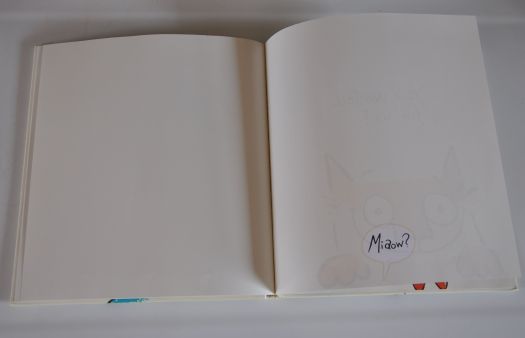
A few artfully blank pages follow…

5

…before the cats return with a whole host of friends.

2

I love everything about these books – the breaking of the fourth wall, the unashamed pantomime narration, the interactive flaps and most of all, the glorious illustrations. They’re so colourful and full of cheeky character.

I mean, look at this guy! What’s not to love?!

6

If you can get a hold of this and There Are Cats in This Book then I can’t recommend strongly enough that you do.

Which are your favourite ‘fun’ books – books which appeal to you as an adult as much as they do to your kids?

Farn ❤

Stories for Boys who Dare to be Different, by Ben Brooks

1

I’ve had this book on pre-order since it was announced and was so happy when it arrived this morning, just in time for the spring holidays!

As a household, we’re big fans of the Rebel Girl books but I’m also very aware of the fact that in addition to showing my children strong female role models, I have to give them examples of men and boys who don’t conform to the stereotype that brute-force will always win the day. And despite the amazing resource that is A Mighty Girl , I’ve yet to find one which lists boys defying stereotypes in the same way.

Which is why I was so excited when I heard about Stories for Boys who Dare to be Different by Ben Brooks.

2

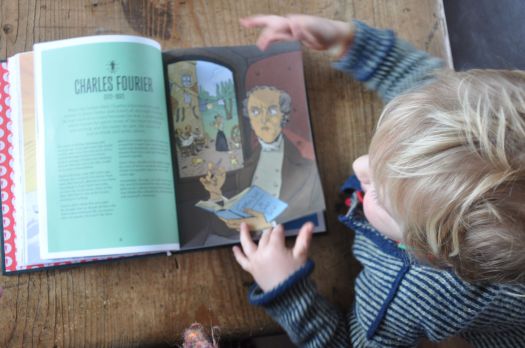
We’ve only read a few of the pages so far, but there are some amazing stories about men I’d never heard of, and equally amazing stories about men whose works I know.

4

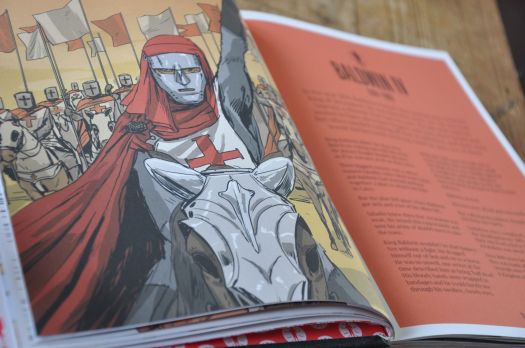
The format is the same as Goodnight Stories for Rebel Girls – a beautiful illustration opposite a short text about the subject. So far there’s a few people I might not have included (Steve Irwin, for example, I thought was an odd choice), but disagreement on this sort of thing is never bad – just an opportunity for discussion about their deeds, both those chosen for the book and those which have been omitted. At the moment, Son is too young for these discussions but I’m sure Daughter will have some lively thoughts on the matter…

3

Whilst the majority of the artwork is wonderful and quite ‘literal’ be aware that if reading to a younger audience there are a few stylised pictures which might cause upset. Son won’t let me read to him about Ai Weiwei as the illustration is a page of sunflowers with faces instead of seeds and he found this distressing. That said, as an adult I love the art – it’s detailed and interesting without being fussy.

Which are your favourite books about Boys who Dare to be Different? And which are your favourite books about Rebel Girls?

Farn ❤

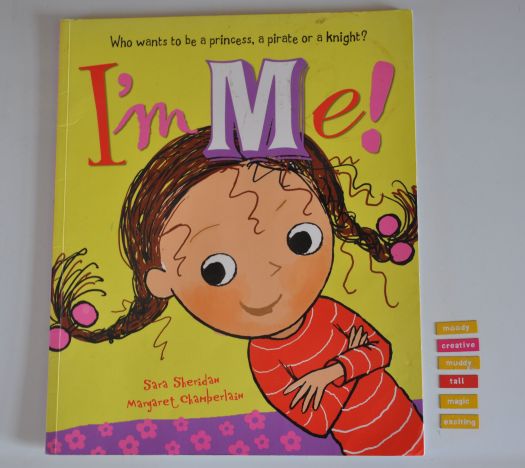
I’m Me! by Sara Sheridan and Margaret Chamberlain

me1

Our copy of I’m Me! by Sara Sheridan and Margaret Chamberlain is very well worn and loved. Gifted to Daughter shortly after she was born, this has been a firm favourite ever since.

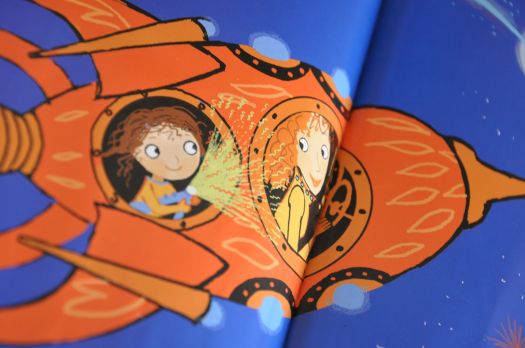
The story follows a little girl called Imogen who goes to play with her Auntie Sara. Auntie Sara is very excited and has all sorts of ideas for games, but Imogen isn’t in the mood – she just wants to be herself, not a knight or a pirate or an astronaut.

me2

The premise of the book is incredibly simple – Auntie Sara suggests a game and Imogen says, “Not today,” until Auntie Sara eventually pauses long enough for Imogen to express herself. The prose follows a pattern which makes it easy for early readers to follow, and predictable enough for pre-readers to join in whilst listening.

Notes from our initial reading – a good six years ago – state that Daughter “really engaged … in a way I’ve not seen before. There’s something about the illustrative style which she found particularly appealing, pointing at ‘imagined’ Imogen and then at ‘narrative’ Imogen, identifying that they were the same character. What I also found incredibly exciting was the page in which Imogen is depicted as a witch’s cat – Daughter pointed at the protagonist in her costume, said ‘cat’ and then proceeded to point to the ‘real life’ Imogen whilst shaking her head and saying ‘cat’ again.”

Daughter was just over fourteen months at this time. That she still likes it as she approaches seven and is able to read fluently for herself speaks a great deal for what is essentially a list of make-believe games.

Do you have any books which have endured like this?

Farn ❤