
Today, I’m reviewing Earth Hagiography, an adult poetry book by Sfarda L. Gül.

This is a first for me, and I’d love to know if you’re interested in me doing more.
But first, let’s get into this.
For those who don’t spend their lives reading about medieval saints for fun, a hagiography is – according to the Cambridge dictionary –
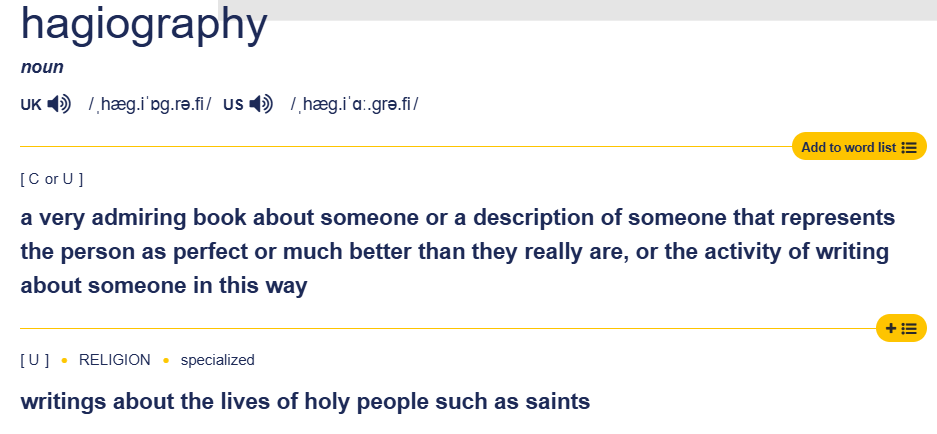
I love this as a title for a book of poems about the earth – it’s probably the main reason why I decided to review this book, rather than sticking to only children’s literature. Not only does it encapsulate this sense of a holy ‘Mother Earth’ , but it also speaks to the idea that we’re celebrating something that has passed – a warning, in this day and age, that the climate crisis can (and will) end us unless we act.
There’s very little in the way of introduction to this book, which I found to be something of a double-edged sword. I love poetry, but one of my favourite things about reading it is looking at the author’s intentions and the way that they were executed. I like Hollie McNish for this reason – her accompanying essays enrich the poetry so much – and I’ll forever be a fan of a good anthology, like Ella Risbridger’s Set Me on Fire. That said, it sort of works here – the intentions of the earth are unknowable, and we can only make meaning in the natural world for ourselves.
The poetry is enigmatic, and as a fan of writing that uses incredibly specific, unusual words that feel good to say aloud, I really loved the vocabulary of this book. And yes, I realise that sounds pretentious, but I was a linguist in a former life. I love the way we pronounce words in contrast to their spellings, and their etymologies, and the way that English has incredibly niche ways to describe such odd things. Words like ‘enubilous’ (used in Dew) just feel so good to say.
Time (Nonlinear) was a favourite – the branching penultimate and final verses reading like the splitting of tree roots. I also loved Taxidermy, which felt both grim and humorous and hopeful. I also found When I opened my Eyes and Natureless Sphericity to be particularly hard-hitting. And then there’s the layout of Solastalgia and Artificial Life both of which I could have spent a long time unpicking – and might, later.
Overall, the themes are somewhat bleak, but that’s probably because… *gesticulates wildly* You know. I do like that the final inclusion is a poem of hope though, or rather, a plea for something to hope for.
If you’re a fan of poetry and words, this is definitely a book you should consider.
___
So, what do we think? Should I review more adult books? More poetry books?
I would love to hear your thoughts.
 THE INQUISITIVE NEWT