The Remembering by Dione Orrom – Random Things Blog Tour

There’s a lot to talk about when it comes to The Remembering by Dione Orrom, and honestly, I’m not really sure where to start.

Simply put, this book is a journey through a dying landscape, in a last-ditch attempt at saving the world from the environmental mistakes of humanity. There were shades of The Neverending Story to this – a race through a collapsing world which emphasises the beauty of things through their absence. There’s also what feels like a nod to The Lion, The Witch, and the Wardrobe – a collection of disparate animals coming together to fight against dark forces. There’s so much to like about this book and so much that makes it timely.

But let’s start at the beginning which – honestly? – is going to put some people off. So, while I’m saying this, please keep in mind that I loved the rest of the book. Really, actually loved it. The thing is though, the first three chapters are… slow. And in chapter 2, especially, there’s a lot of exposition through conversation. That’s not necessarily a bad thing, but when the rest of the book is so fluid and pacy, it felt jarringly clunky. Youngest child (9) gave up, and Eldest (13) said it was a close call.

I think this is partially down to how rich the lore of Orrom’s world is – how much there is to say about every aspect of what’s going on. As the story continues, the quick pace and sense of urgency makes the book very difficult to put down. I read a digital copy, and though the first 20 pages or so were difficult to get through, I found myself at 72% finished by the point it was so far Past My Bedtime that I had to stop reading. I finished the rest first thing the following morning.

As I said above, this story pulls together lots of elements from classic children’s literature. In addition to The Neverending Story, and C.S. Lewis’s cornerstone of children’s fantasy, I could see shades of Michelle Paver’s Wolf Brother series in the characters of Snakeskin and Aster. There are echoes of Elidor in the way that the children only ever know part of what’s going on – there’s the sense that they’re minor characters in a much larger adventure. Some of these books, are amongst my all time favourites.

I think though, as a keen forager, that what I loved most about The Remembering was the way that time-travel seemed to work through the mitochondrial root network that connects tress to fungi. I thought this was absolutely genius and loved the way that Orrom continued this tree-inspired lore throughout. I loved that the trees of the council each had their own personalities and roles to play. Honestly, chef’s kiss to all the lore of this world.

I spoke a little while ago about dystopian climate fiction and how I don’t think it’s the way to engage people with the realities of climate crisis. I passionately believe that we need a future to fight for, more than we need one to steer from. Though it’s never explicitly stated whether Snakeskin and Aster exist in the past or the future of Jack’s time, the closeness that they share with the natural world is something that we can all aim for. Perhaps not literally speaking to the trees – though you never know – but by engaging with the world as a part of it, rather than master of it.

To sum up – if you’re reading this as an adult, stick with it past the first few chapters – you won’t be disappointed. If you’re reading this with children, perhaps read the first five chapters or so together, before handing the book across*.

What are your favourite climate fiction books? I’d love to read some – especially those which offer a vision of hope, rather than dystopia.

___

*This works for Youngest child. Sometimes they’re** convinced that a book with smaller writing is ‘too hard’ so we read the first few chapters together (take a page, turn about), and by the time we get to chapter 2 or 3, kiddo is ready to read the rest alone.

**I’m using the singular ‘they’ pronoun for anonymity, rather than gender reasons, though if you do have recommendations on books for non-binary children, I’d love to hear them.

___

I’ve set up a ‘bookshop‘ of sorts, over on Bookshop.org, so that I can point you to somewhere to buy that isn’t Amazon. I get a small commission for any sales made there. This helps to support me running this blog. If you’d like to get your copy of The Remembering this way, please just click here. Thank you for your support.
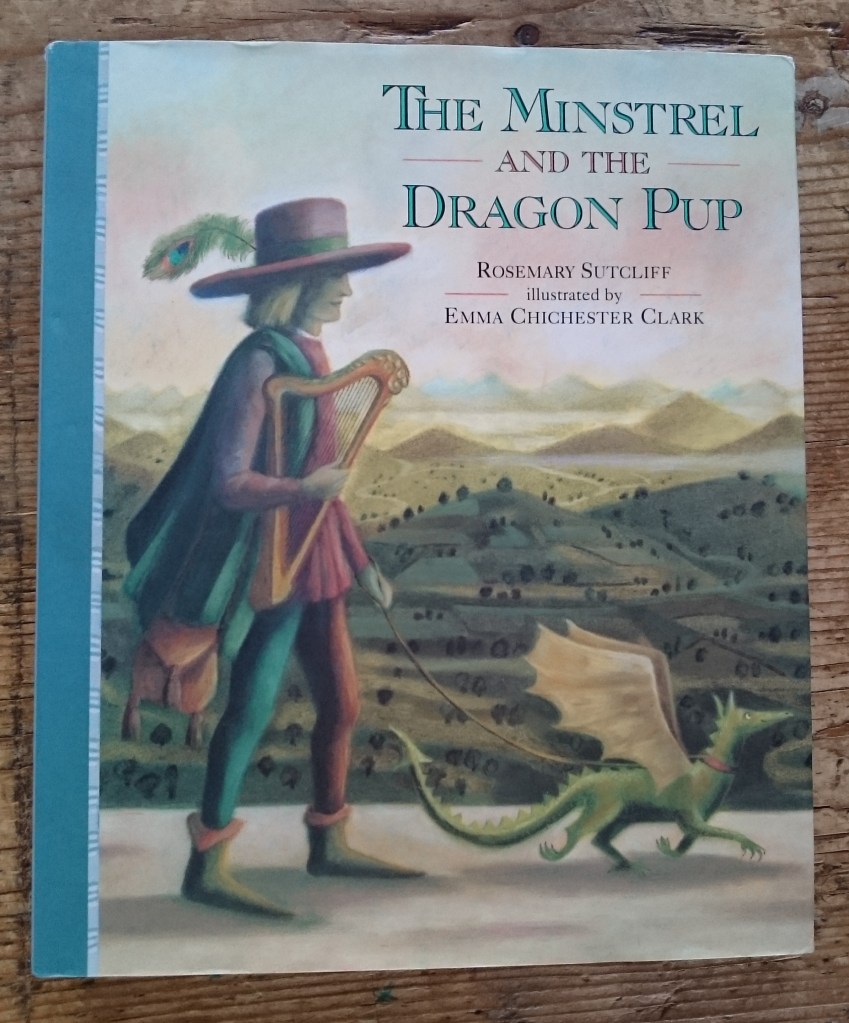
The Minstrel and The Dragon Pup by Rosemary Sutcliff

This is another one of our charity shop finds. And I know I say this about almost all of the books I discuss here, but this one really is one of my favourites.

Perhaps best known for The Eagle of the Ninth, Rosemary Sutcliff has also written a number of books about the Arthurian legends, and I feel as though The Minstrel and The Dragon Pup very much draws inspiration from these. That’s not to say that this is a stereotypical medieval fantasy story – there are no swords, or sorcery. At its core, the tale is about a singing musician who finds a dragon’s egg, hatches it, raises it, and loves the resulting dragon.

And it’s that love which makes this such a rare tale.

I’ve read a lot of fantasy over the course of my life, and I’ve found that if the gender roles of knights and damsels are challenged – and this is rarer than you’d think – that it’s done by placing women in a traditionally masculine role i.e. the Knight Alanna in Tamora Pierce’s The Song Of The Lioness Quartet.

Don’t misunderstand me – that’s brilliant too. But this is honestly the only instance I can think of – off the top of my head, in any case – in which there’s a boy in a caring role, who undertakes a quest for non-romantic love.

The plot follows The Minstrel – a young man who sings for his supper as he tours the kingdom. One day, he finds a dragon egg, just as it’s about to hatch. He cares for the dragon pup – who he names Lucky – and the two form a loving, gentle friendship. One night, though, Lucky is stolen. The Minstrel goes searching for him but to no avail. His songs become sadder and he grows hungrier. Time passes, until a chance encounter leads him to Lucky – a prisoner now in the king’s menagerie. The Minstrel then uses his skills as a song-writer, and the love he feels for his friend, to solve the king’s dilemma and win the freedom of the dragon pup.

Aside from the obvious ‘quest for the love of a friend’, this book is also unique in that the happy ending doesn’t involve vanquishing a foe – neither with violence nor with trickery. It involves healing with music. There are no villains in the work – the thief who steals Lucky is only trying to survive in a harsh world and the Minstrel doesn’t seek vengeance.

Yes, the questing hero is still male, but it feels different to the usual ‘hero saves damsel’ tale on account of the love which drives the search being parental, fraternal, and philial. It’s more Finding Nemo/Finding Dory than any usual fantasy. It deals with the family-we-choose, and I feel like in the context of a blended family, or an adopted family, that this would be a great book to use in a discussion about how kin doesn’t necessarily mean blood-relative.

The story is a gentle subversion of a whole host of fantasy tropes, and as a result, it becomes its own thing entirely.

Have you read The Minstrel and The Dragon Pup? Or any of Sutcliff’s other works? Can you think of any other fantasy stories which avoid the usual stereotypes?

As ever, I’d love to hear your recommendations.

Farn ❤

Bambert’s Book of Missing Stories, by Reinhardt Jung

One of the things that I’ve missed most about the pre-Covid world, is the ability to browse. So many of my very favourite children’s books have been fluke finds in charity shops or the library. From The Year At Maple Hill Farm, to Rosy’s Garden and the myriad of titles in between, these small-print-run, out-of-print gems have quickly become family favoruites.

Bambert’s Book of Missing Stories by Reinhardt Jung is another book which fits this description.

I don’t know whether I can properly call this a ‘browsing’ find, but it was down to a hunger for running my fingers along a shelf of spines which led me to it. Bored, uninspired, and stuck in a rut, I went searching for videos of other peoples’ bookshelves on YouTube. I eventually stumbled on the videos of Leena Norms, and in particular, one of her bookshelf tours. And in that tour, she mentioned Bambert’s Book of Missing Stories.

At its core, this book is a collection of very short tales, but beyond that, it also chronicles the man who gathers these stories together. Old and in pain, the eponymous Bambert writes himself stories as a way to combat loneliness. One day, he settles on the idea of releasing his work into the world so that it can find its own setting.

I bought the book before I’d even finished hearing the plot.

I have always been, and always will be, a total romantic when it comes to story telling. The stories around stories – the tales of the writers and the bards – make my heart sing.

And Bambert’s Book of Missing Stories is that – a book about a book – but it’s also so much more.

The writer – Reinhardt Jung – was born in Germany in 1949, and some of the themes in Bambert’s tales seem to deal with the country’s fascist past. The text doesn’t do this overtly, but the story about the glass rafts is clearly about the concentration camps of the Nazi regime. Another two stories deal with war directly, with children as protagonists.

It might sound, at this point, like the book is a somewhat dark affair, but it really isn’t. Interlaced through the stories are insights into Bambert’s life, and the budding, gentle friendship which forms with the shopkeeper in the store below. It’s a rare tale about men befriending one another in a way that is supportive and caring. This happens so seldom in children’s literature that I feel it merits a mention.

A few points of note: the protagonist drinks to forget his pain, both he and the shopkeeper smoke cigars, and there is character death (though this is dealt with tenderly and poetically). The book touches on love and disability, and the fact that these things may not necessarily go hand-in-hand. It is a work which – for my part – I feel needs to be debriefed with older children, or read aloud to younger children to facilitate discussion about the events it contains.

But it should absolutely be read and enjoyed by children.

We don’t give young people enough credit for the levels of complexity that they’re able to process, and we can be neglectful when it comes to providing stories which deal in shades of grey, or which deal with death, or disappointment. But by showing them examples of these things in literature, we can better equip them for when life is less than ideal – by getting to know Bambert, for example, they might come to know that they’re not alone in feeling lonely.

I would love to hear your opinions on Bamburt’s Book of Missing Stories, if you’ve read it. And I would love to hear if you know of any other books which provide challenging content.

Love,

Farn ❤

This Book is Not Rubbish by Isabel Thomas

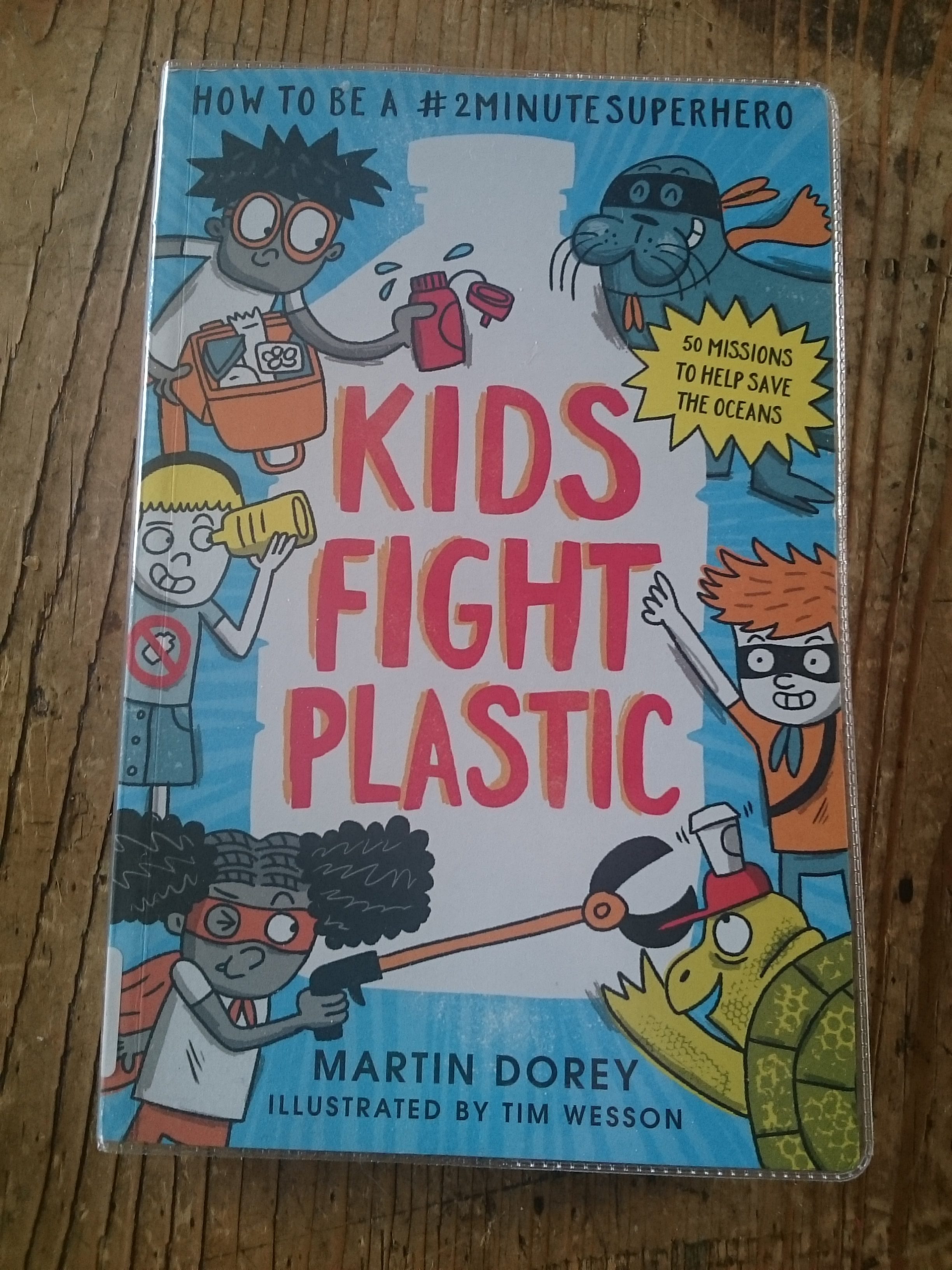
After Daughter’s enthusiasm for Kids Fight Plastic by Martin Dorey, we thought we would have a look at This Book is Not Rubbish by Isabel Thomas.

Very similar to the previous title, this book details child-friendly ways to reduce our impact on the environment.

Firstly, as an adult reading this (and especially as an adult being expected to miraculously implement everything right now) I would have liked a link to the science that backs the claims of this book. I kept trying to find sources for the facts and figures stated, but kept coming up blank. I felt that some of the points contradicted what’s often accepted as common environmental wisdom but that’s possibly because I haven’t read enough recent literature on the subject.

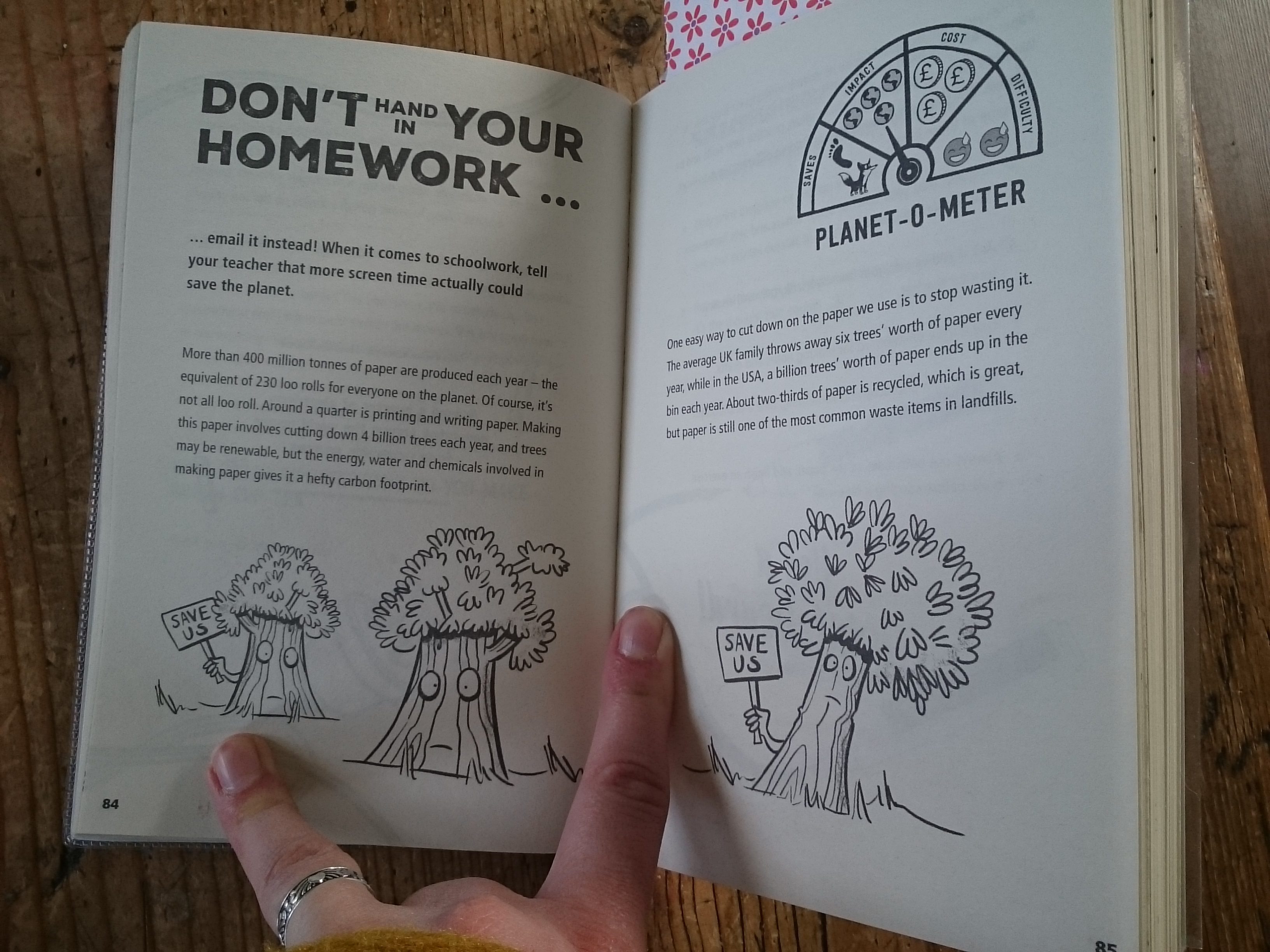
That aside – again, as an adult – I felt that the illustrations and jokes were trying a little too hard to appeal to children. Daughter actually got fairly upset at the thought of sentient trees (pictured above) and would have just preferred a wholly factual approach as in the previous book. That said, we are a fairly atypical family in many respects, so perhaps this approach would work for those who found Kids Fight Plastic too blunt.

Regardless of these comments, I would definitely recommend this title for any small ecologists. The almost bullet-point nature makes it accessible to reluctant readers, or makes it a really quick read for those who are more confident. It’s also nice to have something to dip in and out of – ideal to read during short journeys, or to keep on a living room table for a quick ‘grab’ from bored little fingers.

We’ve got one earth-friendly book to review fromm our reading so far. Are there any similar books you would recommend?

Farn ❤

Kids Fight Plastic by Martin Dorey

I have seldom seen Daughter as excited by a book as she was when we found Kids Fight Plastic by Martin Dorey at our library. Which is saying something – she gets really excited by books.

Just before the summer holidays started, she took part in a litter-pick and since then has been on a one-child mission to eliminate plastic waste from our home. Now, fully armed with a handbook on how to do that, she’s become a force to be reckoned with.

So, having had this book flashed at me more times than I care to admit to, I thought I would take a closer look.

For the most part, I really like the tone of the book. It’s not anti-all-plastic – there is mention at the beginning of good vs bad (i.e. Lego & medical equiptment = good plastic, single-use straws & clingfilm = bad plastic). I also really like that nothing is dumbed down because it’s written for children. It states in black and white that sea birds are dying because of what we’re throwing away, and whilst that’s a grim fact, it’s not going to change unless we talk about it and let our children make informed choices for themselves.

On the other hand… titles of segments such as ‘Fight Plastic With Pester Power’ made me feel as though the book was targeted at a very… specific demographic. Suggestions of ditching the supermarket in favour of farmers’ markets are well meant, for example, but they’re just not within everyone’s means – whether as a result of financial restraints or the fact that there just aren’t any farmers’ markets in your area.

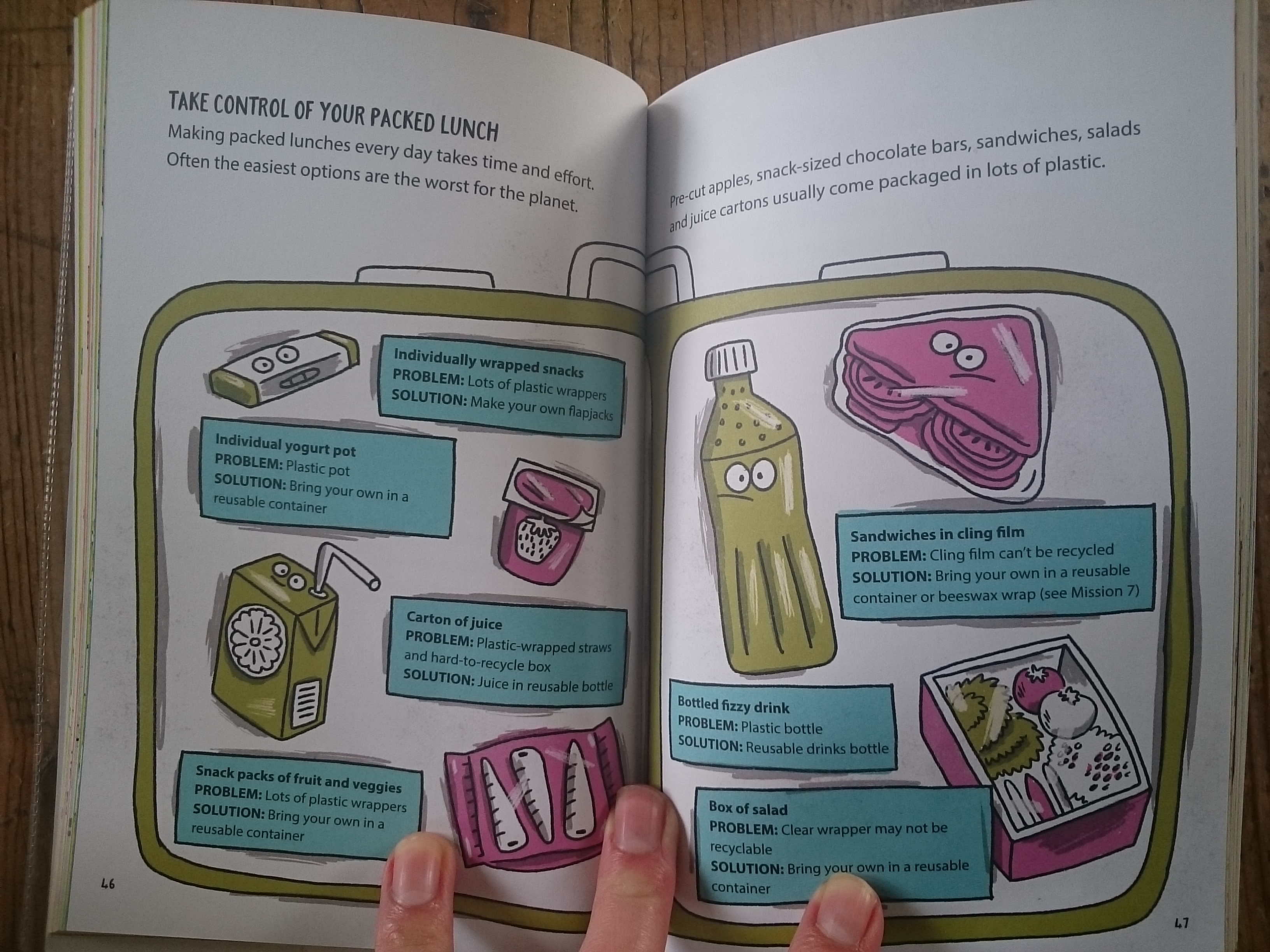
But that aside – the illustrations are lovely and as I said, the text isn’t in the least bit patronising. And whilst living where we do, there’s no way I could use a milk-man, or visit a weekly farmers’ market (they only run monthly and ours tends to sell hobby crafts rather than produce), I did get some ideas as to how I can further reduce our household waste, particularly in regards to things like stationery.

I think, coupled with a healthy dose of managed expectations, this is a great book to get small people thinking about, and talking about, the waste we’re creating. Hopefully doing so will help them to make wise decisions further down the line.

What are your favourite books about the environment?

Farn ❤