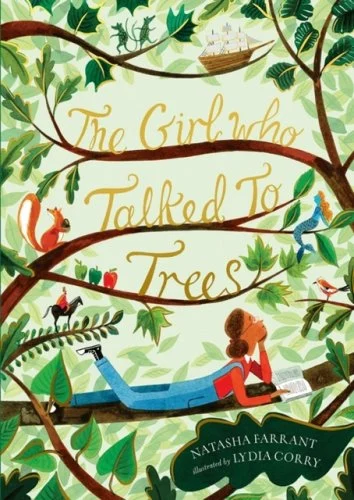
The Girl Who Talked to Trees by by Natasha Farrant and Lydia Corry 

This is a gorgeous concept-album of a book. Following the story of Olive, The Girl Who Talked to Trees by by Natasha Farrant and Lydia Corry, is about the life of an oak across the ages, but also about the other trees close by.

When ‘her’ oak is threatened with removal, Olive sends out a wish, hoping to figure out how to save it. In her dreams, the trees begin to tell her tales of their lives across time – a series of self-contained, yet interconnected short stories which cover the mythology and facts about different types of trees. On waking, Olive uses these tales to advocate for her oak, and ultimately save it.

The connection between people and the natural world is beautifully explored in this book, not just in the present day, but also across history. The differences between how people treat some kinds of tree compared to others is also touched upon, as is the way we conceptualise the forest, verses individual trees.

I actually listened to this as an audiobook, so wasn’t aware how beautifully illustrated the physical copy is. Researching for this post, though, led me to some photos of amazing full colour illustrated spreads, and I think I might have to invest in my own copy. It was amazing to listen to this book, but I’d like to be able to enjoy the glorious artwork too.

This is a rare look at the very personal side of felling trees, and the way in which individuals interact and form relationships with single plants. It reminds me of a line from Oak and Ash and Thorn, by Peter Fiennes where he asserts that whilst Britain loves trees, we’re afraid of the woods. That really plays out here, across the series of short stories.

If you’d like more books on nature, the environment, plants, or the climate crisis, there’s a short list here. Hopefully I’ve included something for everyone:

Terra Electrica (Middle Grade)
Global (Graphic Novel)
Feast of Ashes (Young Adult)
This Book is Not Rubbish (Non-fiction)
Ruby Nettleship and the Ice Lolly Adventure (Picture Book)
Plant the Tiny Seed (Picture Book)
We Travel So Far (Picture Book)
A Swift Return (Picture Book)

What are your favourite nature books for children? Do you know of any others told in this short-story format? As always, I would love to hear your recommendations! ❤

Fran xx

___

I’ve set up a ‘bookshop‘ of sorts, over on Bookshop.org, so that I can point you to somewhere to buy that isn’t Amazon. I get a small commission for any sales made there. This helps to support me running this blog. If you’d like to get your copy of The Girl Who Talked to Trees this way, please just click here. Thank you for your support.
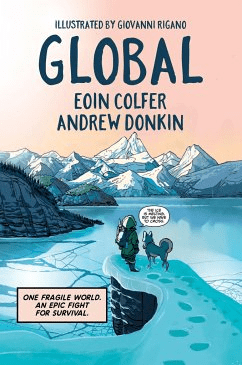
Global by Eoin Colfer, Andrew Donkin and Giovanni Rigano

Comics have had a lot of bad rep over the years, but hopefully as a society, we’re coming to recognise how important they are as a reading medium. Comics require reading skills, of course,* but they also require a visual literacy that translates wonderfully to the critical reading of advertisements. As someone who has always loved the medium, I’m really thrilled to see graphic storytelling being treated with increasing respect, and being employed for increasingly important topics.

This incredible graphic novel, Global, follows the lives of two children – one impacted by melting ice, the other by flooding land. Eoin Colfer, Andrew Donkin and Giovanni Rigano have done an absolutely amazing job of communicating the climate crisis in a personal, sympathetic, and beautiful way.

I found the afterword particularly affecting; throughout the book I felt as though I was reading about a point in the near-future, a time that was coming if we continue to do nothing. But the afterword made it clear that these were events were taking place in the present. The sheets explaining climate change following this were also fantastic, and really made the information accessible.

As someone who’s just coming out of a degree and so is used to citing everything, I also appreciated that this book had employed a research consultant (Vivien Francis). This is – sadly – not as common as you might think in non-fiction books, so to see it in a fictional work was particularly nice.

And for those, like my youngest, who might be concerned about the fate of the dog in this book, I’m happy to report that the dog is still alive at the end.

Overall, this is a fabulous book for humanising the climate crisis, and for engaging empathetically with the world around us. The two very different plots really help to bring home how multifaceted an issue this is, while still working within such a visual medium; comics don’t give you a lot of space for footnotes, or whole paragraphs dedicated to exposition, so this was such a clever way of exploring the interconnectedness of environments across the earth.

Of the various children’s books I’ve read which touch on climate change/the environment, this is by far the one I’ve liked best so far. If you’d like to investigate others, check out:
Terra Electrica (Middle Grade)
Feast of Ashes (Young Adult)
This Book is Not Rubbish (Non-fiction)
Plant the Tiny Seed (Picture Book)
We Travel So Far (Picture Book)
A Swift Return (Picture Book)

What are your favourite books about the environment and climate change for children? I would absolutely love some more recommendations!

Fran xxx

I’ve set up a ‘bookshop‘ of sorts, over on Bookshop.org, so that I can point you to somewhere to buy that isn’t Amazon. I get a small commission for any sales made there. This helps to support me running this blog. If you’d like to get your copy of Global this way, please just click here. Thank you for your support.
___
* If you’re not familiar with reading comics, I’d recommend conceptualising them as reading a play with images instead of stage-directions. And if you’re unfamiliar with plays, do yourself a huge favour and go and read The Importance of Being Earnest – it’s free on Project Gutenburg! It’s Oscar Wilde’s greatest gift to theatre kids the world over.

This Book is Not Rubbish by Isabel Thomas

After Daughter’s enthusiasm for Kids Fight Plastic by Martin Dorey, we thought we would have a look at This Book is Not Rubbish by Isabel Thomas.

Very similar to the previous title, this book details child-friendly ways to reduce our impact on the environment.

Firstly, as an adult reading this (and especially as an adult being expected to miraculously implement everything right now) I would have liked a link to the science that backs the claims of this book. I kept trying to find sources for the facts and figures stated, but kept coming up blank. I felt that some of the points contradicted what’s often accepted as common environmental wisdom but that’s possibly because I haven’t read enough recent literature on the subject.

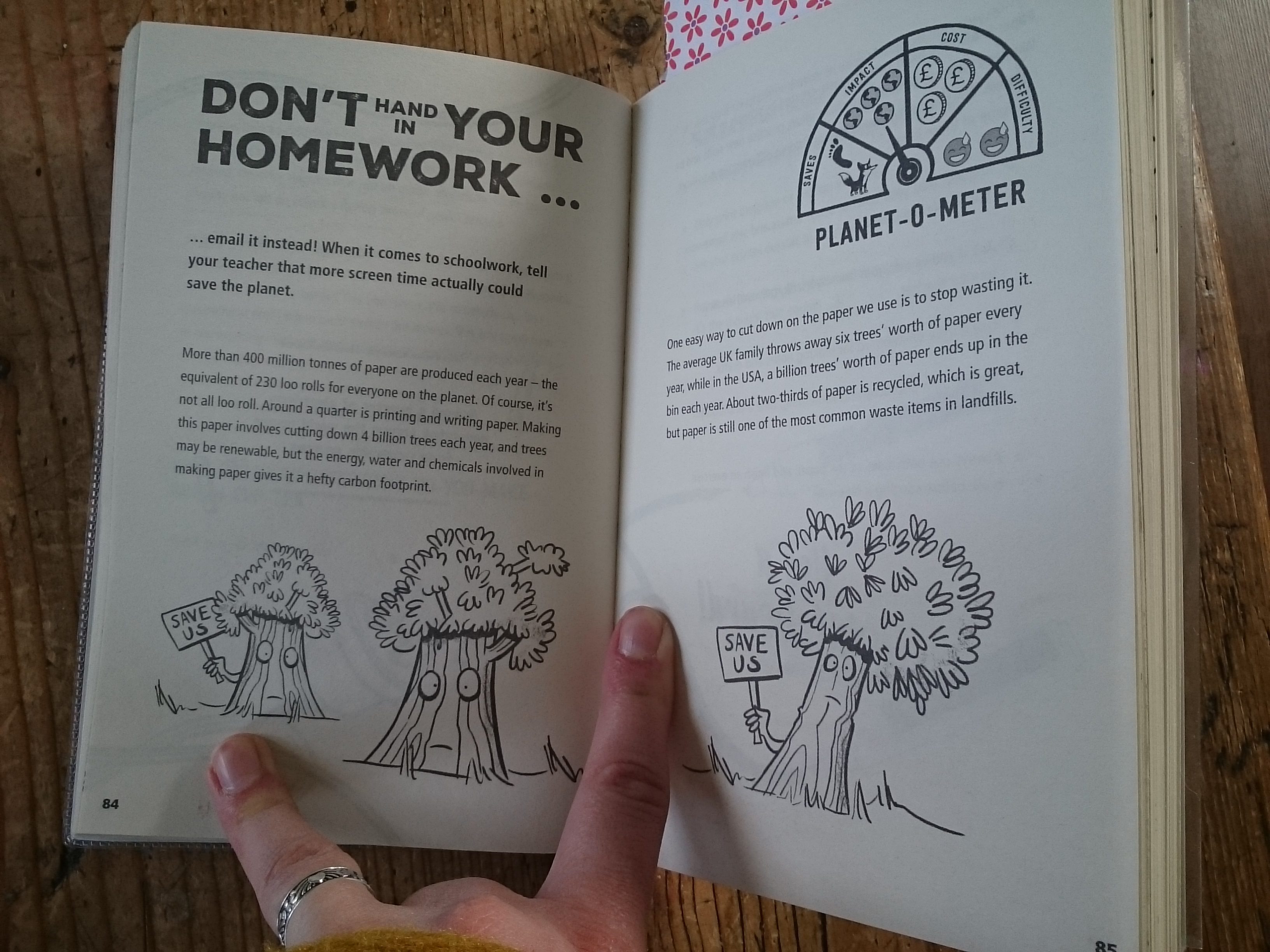
That aside – again, as an adult – I felt that the illustrations and jokes were trying a little too hard to appeal to children. Daughter actually got fairly upset at the thought of sentient trees (pictured above) and would have just preferred a wholly factual approach as in the previous book. That said, we are a fairly atypical family in many respects, so perhaps this approach would work for those who found Kids Fight Plastic too blunt.

Regardless of these comments, I would definitely recommend this title for any small ecologists. The almost bullet-point nature makes it accessible to reluctant readers, or makes it a really quick read for those who are more confident. It’s also nice to have something to dip in and out of – ideal to read during short journeys, or to keep on a living room table for a quick ‘grab’ from bored little fingers.

We’ve got one earth-friendly book to review fromm our reading so far. Are there any similar books you would recommend?

Farn ❤

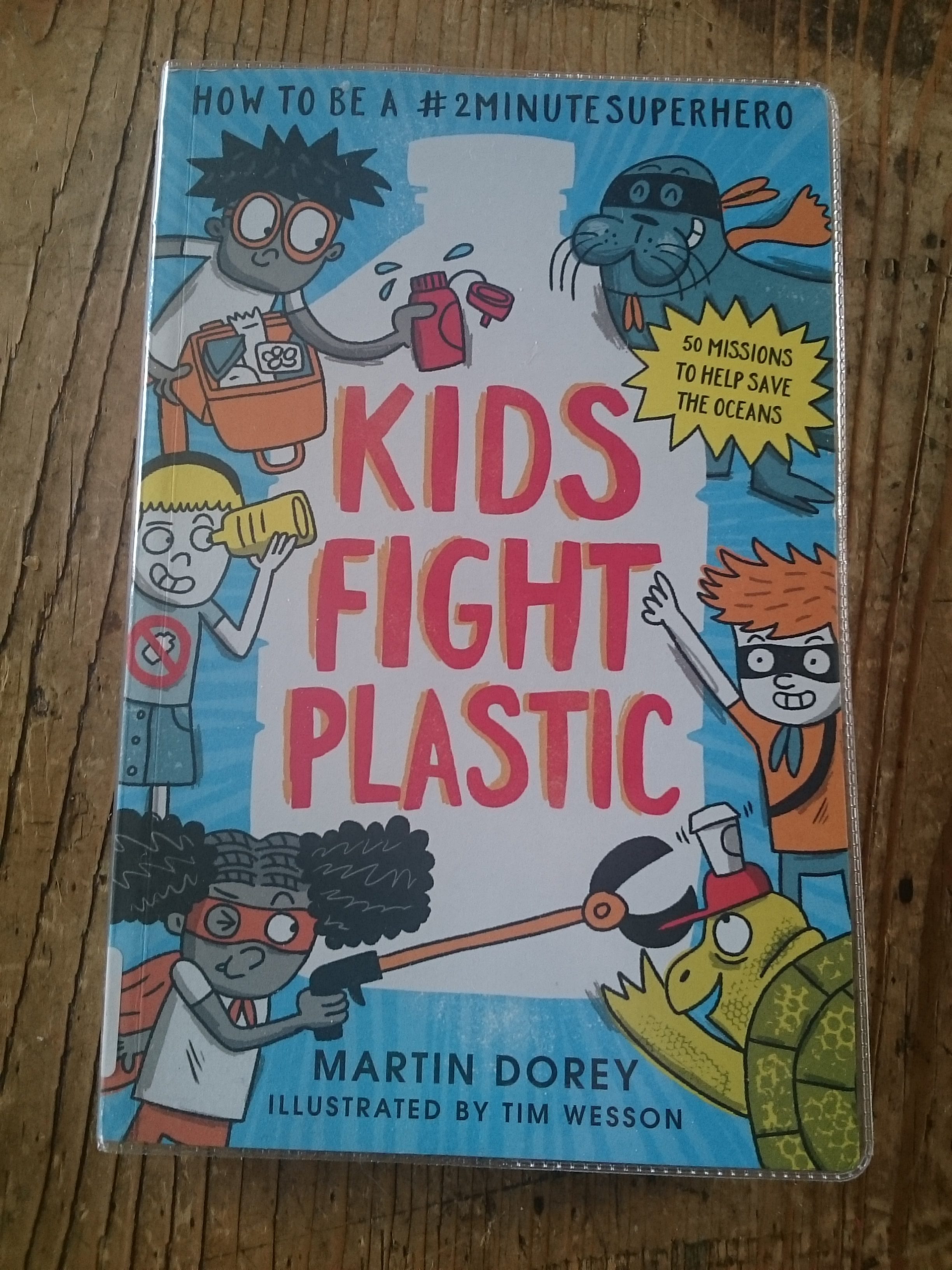
Kids Fight Plastic by Martin Dorey

I have seldom seen Daughter as excited by a book as she was when we found Kids Fight Plastic by Martin Dorey at our library. Which is saying something – she gets really excited by books.

Just before the summer holidays started, she took part in a litter-pick and since then has been on a one-child mission to eliminate plastic waste from our home. Now, fully armed with a handbook on how to do that, she’s become a force to be reckoned with.

So, having had this book flashed at me more times than I care to admit to, I thought I would take a closer look.

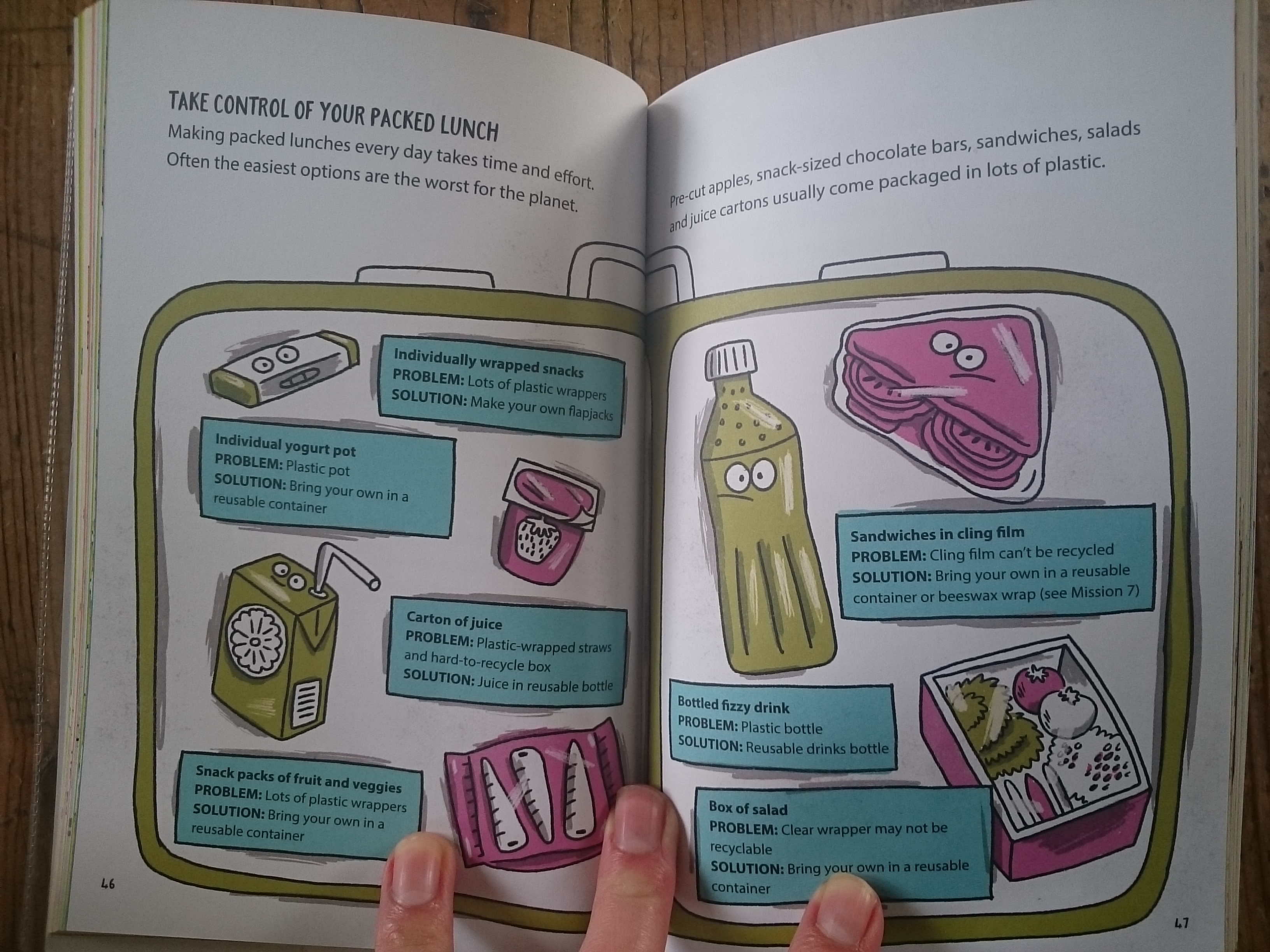
For the most part, I really like the tone of the book. It’s not anti-all-plastic – there is mention at the beginning of good vs bad (i.e. Lego & medical equiptment = good plastic, single-use straws & clingfilm = bad plastic). I also really like that nothing is dumbed down because it’s written for children. It states in black and white that sea birds are dying because of what we’re throwing away, and whilst that’s a grim fact, it’s not going to change unless we talk about it and let our children make informed choices for themselves.

On the other hand… titles of segments such as ‘Fight Plastic With Pester Power’ made me feel as though the book was targeted at a very… specific demographic. Suggestions of ditching the supermarket in favour of farmers’ markets are well meant, for example, but they’re just not within everyone’s means – whether as a result of financial restraints or the fact that there just aren’t any farmers’ markets in your area.

But that aside – the illustrations are lovely and as I said, the text isn’t in the least bit patronising. And whilst living where we do, there’s no way I could use a milk-man, or visit a weekly farmers’ market (they only run monthly and ours tends to sell hobby crafts rather than produce), I did get some ideas as to how I can further reduce our household waste, particularly in regards to things like stationery.

I think, coupled with a healthy dose of managed expectations, this is a great book to get small people thinking about, and talking about, the waste we’re creating. Hopefully doing so will help them to make wise decisions further down the line.

What are your favourite books about the environment?

Farn ❤

Plant the Tiny Seed by Christie Matheson

seed1

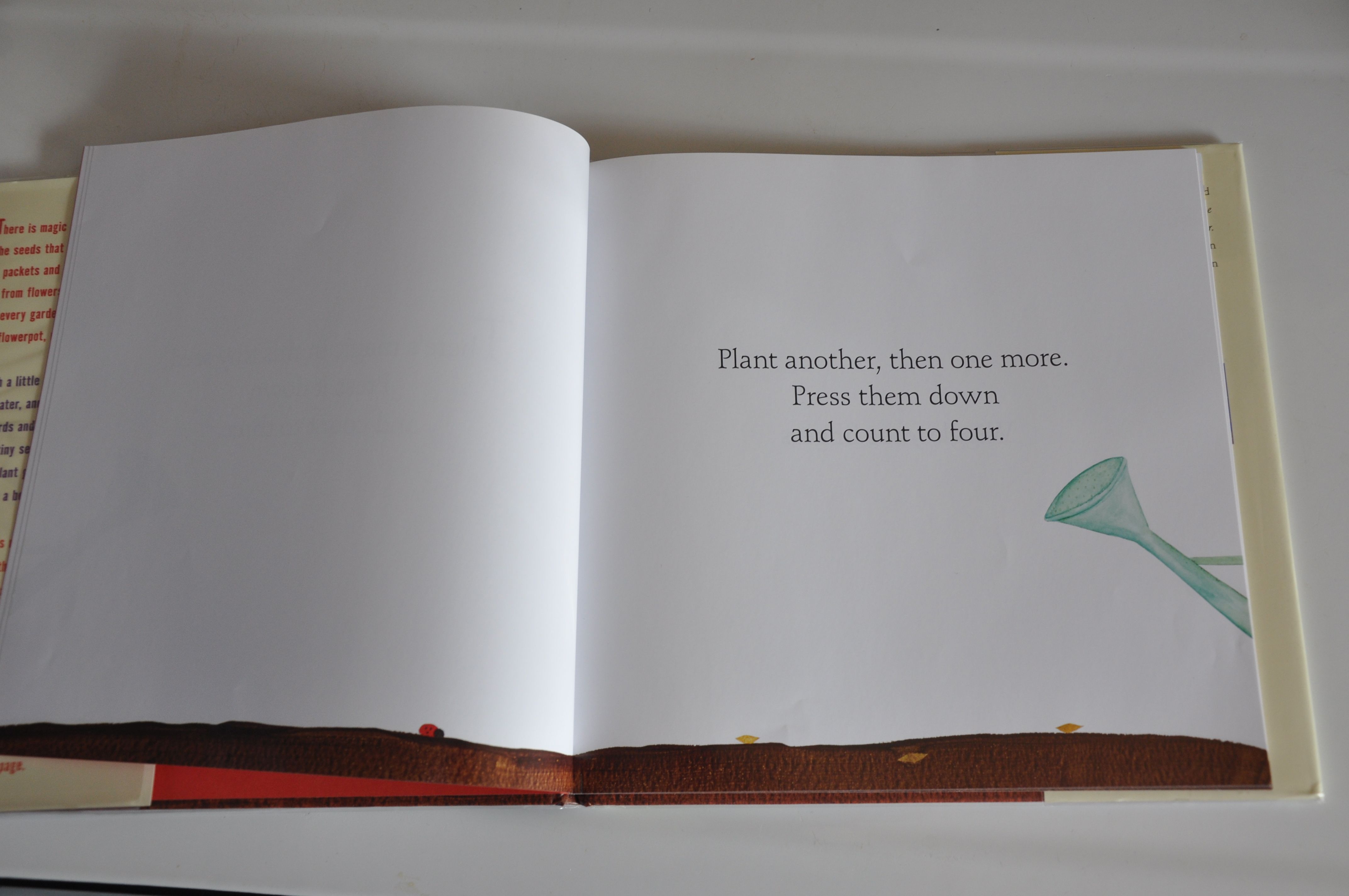
Plant the Tiny Seed by Christie Matheson is a really fun introduction to gardening, and is one of those books which call for a high degree of interaction between reader and listener – something I absolutely love.

seed3

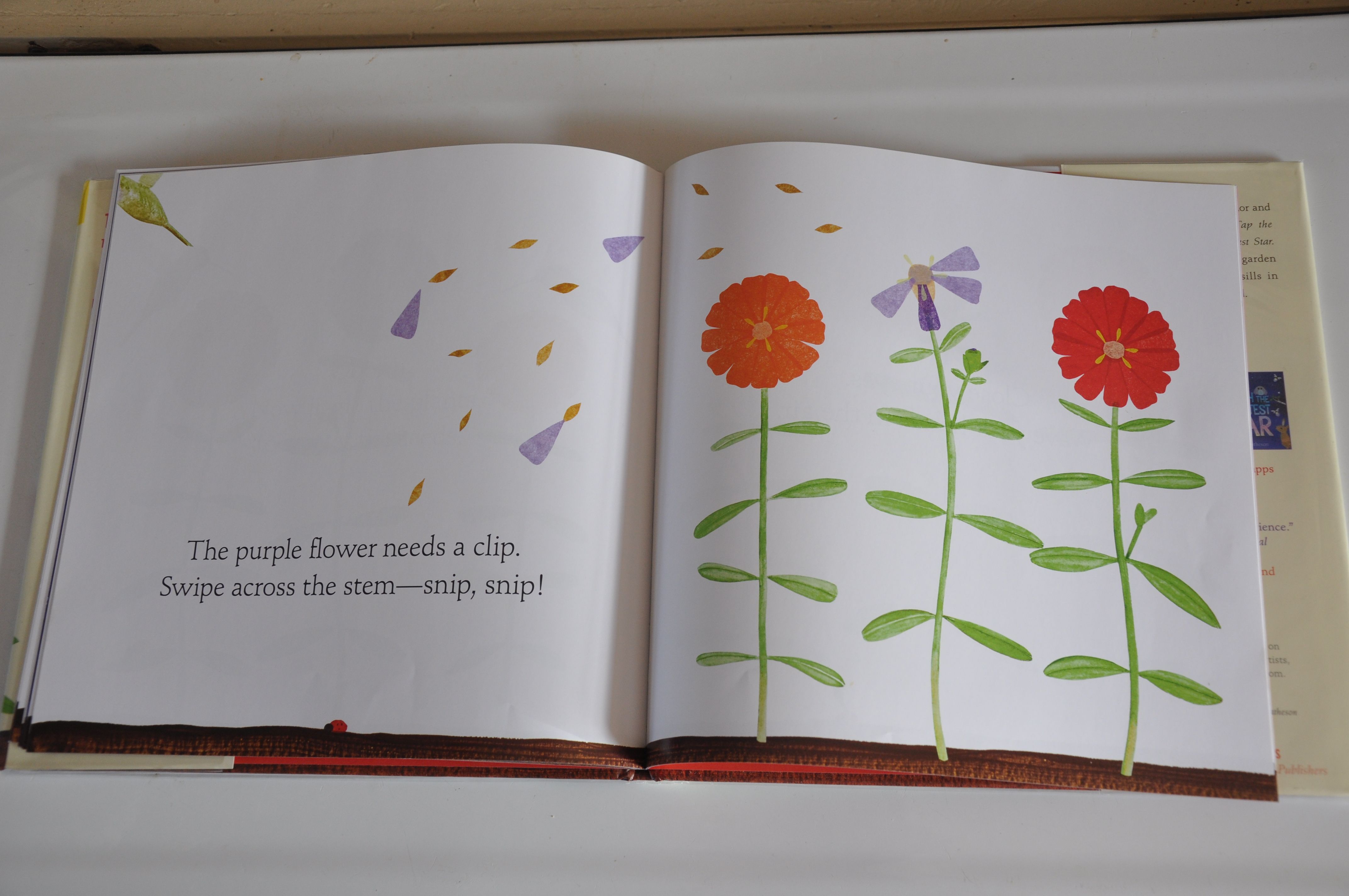
Told in verse and requiring lots of finger actions, this is a fantastically fun little gem of a book. Beginning with the page above and ending with a row of flowers, there are all kinds of things to giggle at in between.

seed2

There isn’t a great deal more to be said about this book – lots of bright illustrations, few well-chosen words… it’s a delight to read to small people.

It’s definitely one I would recommend getting a copy of and just trying for yourself.

Have you read Plant the Tiny Seed by Christie Matheson? Did you like it as much as me?

Farn ❤