Scareground by Angela Kecojevic – Blog Tour

Well, this is exciting! I get to be part of another blog tour! This time, I’m looking at Scareground by Angela Kecojevic.

This is a great book for fans of Tim Burton, or Coraline – it very much feels like a story that would do well told with slightly-creepy stop-motion monochrome puppets.

The narrative arc follows Nancy Crumpet, an orphan adopted by a family of bakers. Nancy is friends with Arthur, a doctor’s son, and together, they get up to mischief on the rooftops above the streets of Greenwich… until the Scareground comes to town.

It’s actually very difficult to sum up all the threads of this book for the sake of a review without spoilering anything – Nancy sports an unusual horse-shaped birth mark and can understand the sky, the Scareground seems to be powered by fear, Arthur’s mum died and his relationship with his dad is strained, and Nancy’s family are keeping her mysterious origins a secret from her. There’s a lot for a curious child to sink their proverbial teeth into within the plot, and yet, the world Kecojevic has created feels self-contained, and almost claustrophobic at times. Normally, I’m a lover of expansive worlds that hint at possibility in all direction, but actually, the tightness of the setting really helps to foster that sense of unease that seems to permeate all old-timey fair grounds.

Because of this really tidy, almost-cramped setting, the whole thing seems even more like a puppet theatre – a world within four walls and peopled by archetypal characters. Skelter is the charismatic ringmaster, and Nancy is the plucky orphan, and both seem almost predestined to follow a certain path. There’s a sense that this story is a pastiche of Pinocchio’s circus, or The Nightmare Before Christmas – in the best possible way.

The only thing that I found slightly jarring was within the first few chapters, where Nancy and Arthur are trying to decide whether to visit the fair or not – first Nancy is going, then she isn’t, then she is again… I felt that for a child decisive enough to drop sneeze bombs down others peoples’ chimneys, the indecision here was a little out of character. Still, that’s just my preference reading this as an adult. I imagine that the sense of indecisiveness is potentially very relatable to a younger audience – especially those in this book’s target age-range who are just beginning to push at parental boundaries.

All in all, I thought this was a really fun take on fairground horror, and a great introduction to the macabre – from here, I’d point readers in the direction of Neil Gaiman’s The Graveyard Book, or Chris Riddell’s Goth Girl, or the Cirque Du Freak books by Darren Shan.

As ever, I’d love to hear your thoughts – let’s talk books! What are your favourite middle grade horror stories?
Blurb

Roll up, roll up, the Scareground is in town!

Twelve-year-old Nancy Crumpet lives above a bakery and her life is a delightful mix of flour, salt, and love. Yet her mind is brimming with questions no one can answer: Why did her birth parents disappear? Why can she speak with the sky? And why must she keep her mysterious birthmark hidden?

Everything is about to change when the Scareground returns to Greenwich. Nancy is convinced it holds the answers to her parents’ disappearance. Nancy and her best friend Arthur Green meet the fair’s spooky owner, Skelter, and discover a world full of dark magic and mystery. Nancy must confront her greatest fears to get to the truth. But is she ready for all the secrets the Scareground will reveal?

About the Author

Angela Kecojevic is a senior librarian, author and creative writing tutor. She has written for the Oxford Reading Tree programme and the multi-award-winning adventure park Hobbledown where her characters can be seen walking around, something she still finds incredibly charming! She is a member of the Climate Writers Fiction League, a group of international authors who use climate issues in their work. Angela lives in the city of Oxford with her family.

Norah’s Ark by Victoria Williamson – Blog Tour

Aah! I’m so excited to be part of the Blog Tour for Victoria Williamson’s new book, Norah’s Ark!

At its core, Norah’s Ark is a book about friendship, courage, and animals, but it’s also very much a book about the UK in its current state.

Williamson’s eponymous Norah is a foodbank user, living in temporary accommodation, and as such represents a demographic of child that is so often overlooked in children’s literature, despite the fact that in 2021-22, 4.2 million children in the UK were living in poverty.

That’s 29% of all children, or 9 in a classroom of 30.

Yeah… I needed some time to let that one sink in too. And they’re not even the most up-to-date statistics.

Important as Norah’s background is, it isn’t the main focus of the story – the narrative follows Norah and Adam as they try to rescue various animals from the park near Adam’s house, and from around the town of Hull. Drawing inspiration from one another, they learn to face obstacles in their own lives – for example, Norah stands up to the girl who has been bullying her, while Adam learns to advocate for himself in the face of his mother’s overbearing anxiety.

I actually really loved the setting of this book, knowing Hull and Grimsby in some small capacity. I feel like the polarity between Norah and Adam’s living situations (Norah being a foodbank user and Adam living in a lovely, big house), very much reflected my own experience of the town and its surrounding suburbs and villages. Williamson worked this contrast beautifully through the narrative too – there was no Prince and the Pauper romanticism to it, rather a sympathetic objectiveness which meant that though I was absolutely rooting for the two main characters, I wasn’t rooting for them because of Norah’s poverty of Adam’s cancer. I was rooting for them because they were just good kids.

My only criticism, small as it is, was the flood of very serious information about Norah’s mother, right at the end of the book. Alcoholism, post-natal depression, and custody battles are all fairly weighty topics and though I didn’t necessarily feel they needed to be discussed in more detail to forward the plot, I wonder if a little glossary at the back might have been helpful for children who haven’t come across these concepts before. Additionally, there seems to be the implication that Norah has Foetal Alcohol Spectrum Disorder (FASD), though this isn’t explicitly stated. Again, just naming the condition might have given parents reading with children an opportunity to open a conversation about this. As I said though, it’s a very minor point, and not one that I feel detracts from the story at all.

Finally, I think it would be remiss of me not to mention rescue animals as part of this review. I’ve been absolutely blessed to welcome a rehomed cat and dog into our family over the years, and I can’t tell you how grateful I am that they’ve been part of my life. At the moment, with cost-of-living crisis being as it is, so many families are being forced to give up their pets due to housing restrictions in rented accommodation, and the cost of food. Norah’s struggle to keep even a hamster and pet spider really highlights the need for provisions to keep children and their pets together. So that being said, I’ve donated what I would have paid for this book to the Blue Cross animal food bank, had Neem Tree not kindly sent us this copy.

20% of Williamson’s royalties from sales of Norah’s Ark will be going to Shelter.

What’s your favourite book about animal rescue? I’d love to hear your favourite pet-rescue tales… or should I say ‘tails’! Have you ever adopted a pet? What’s their story?

As ever, with love,

Fran ❤

I’ve set up a ‘bookshop‘ of sorts, over on Bookshop.org, so that I can point you to somewhere to buy that isn’t Amazon. I get a small commission for any sales made there. This helps to support me running this blog. If you’d like to get your copy of Norah’s Ark this way, please just click here. Thank you for your support.

The Power of Welcome by Bamyani, Jusic, Kaadan, Ramzee, & Zhurenko

I’ve been absolutely terrible at making the time to review on this blog for the last year. Eye-ball deep in an archaeology degree and a writing mentorship (I actually won the Kelpies Prize!) I’ve been reviewing what I’ve read in short-form over on Twitter because I just haven’t had the time to write anything longer.

Now that the mentorship is over, and we’re in the middle of the summer break, I’ve got some time to spare and wanted to begin reviewing again by highlighting this absolutely brilliant book.

The Power of Welcome: Real Life Refugee and Migrant Journeys, written by Marie Bamyani, Ada Jusic, Nadine Kaadan, Ramzee, and Sonya Zhurenko, and illustrated by Ada Jusic, is a fantastic example of why everyone who says that comic books aren’t ‘real books’ is wrong.

The Power of Welcome tells true stories from Ukraine, Somalia, Bosnia, Syria and Afghanistan, and doesn’t shy away from detailing the difference in the type of welcome a person receives, based on their origins (i.e. in Germany and the UK, those from the Ukraine have been more readily accepted than those from Afghanistan, for example). It also discusses the preconceptions of people from the destination countries – comments from Londoners about the fact they hadn’t expected swimming pools to exist in Syria, for example, say everything.

The line, ‘people are kinder to animals that people who are different to them’ stood out to me especially.

Format-wise, the book offers the context to each story in a prose introduction, usually detailing the history of the author’s place of origin and the reasons why someone might have to leave. The stories told through artwork can stand alone, so even if you have a child who absolutely won’t engage with prose, they’re still going to get a lot out of this. It’s also a really good way to engage as a family – the adult could read the national histories aloud, then let the child read the graphic novel sections alone.

I’ve heard so often, whilst volunteering at a library, or working in a bookshop, that comics ‘aren’t real books’ but nothing could be further from the truth. The quantity of art included in each graphic novel is impressive, and is a really accessible, hard-hitting way to present vital information. And refugee stories truly are vital information in a time when the UK is actively seeking to create a hostile environment for those fleeing violence. The more we can counter the misinformation currently being pedalled by those in power to distract from their own failings and corruption, the better hope we have as a nation of doing better – of meeting the very minimum requirements of compassion to our fellow human beings.

Do you know of any other graphic novels which deal with non-fiction topics like this? I’d love to hear about them and try to get a copy.

With much love,

Farn ❤

Something amazing happened!

Oh my goodness!
Something amazing happened!
I haven’t updated in a long while because I’ve been working on a top-secret project – a novel! And today, The Kelpies Prize for Writing 2022 announced their shortlist and my book is on it!

You can take a look at my entry, along with those of the other three finalists, by going to the Kelpies website! Personally, I’m especially invested in Spokey the dragon, but they’re all wonderful pieces.

I would love to hear what you think!

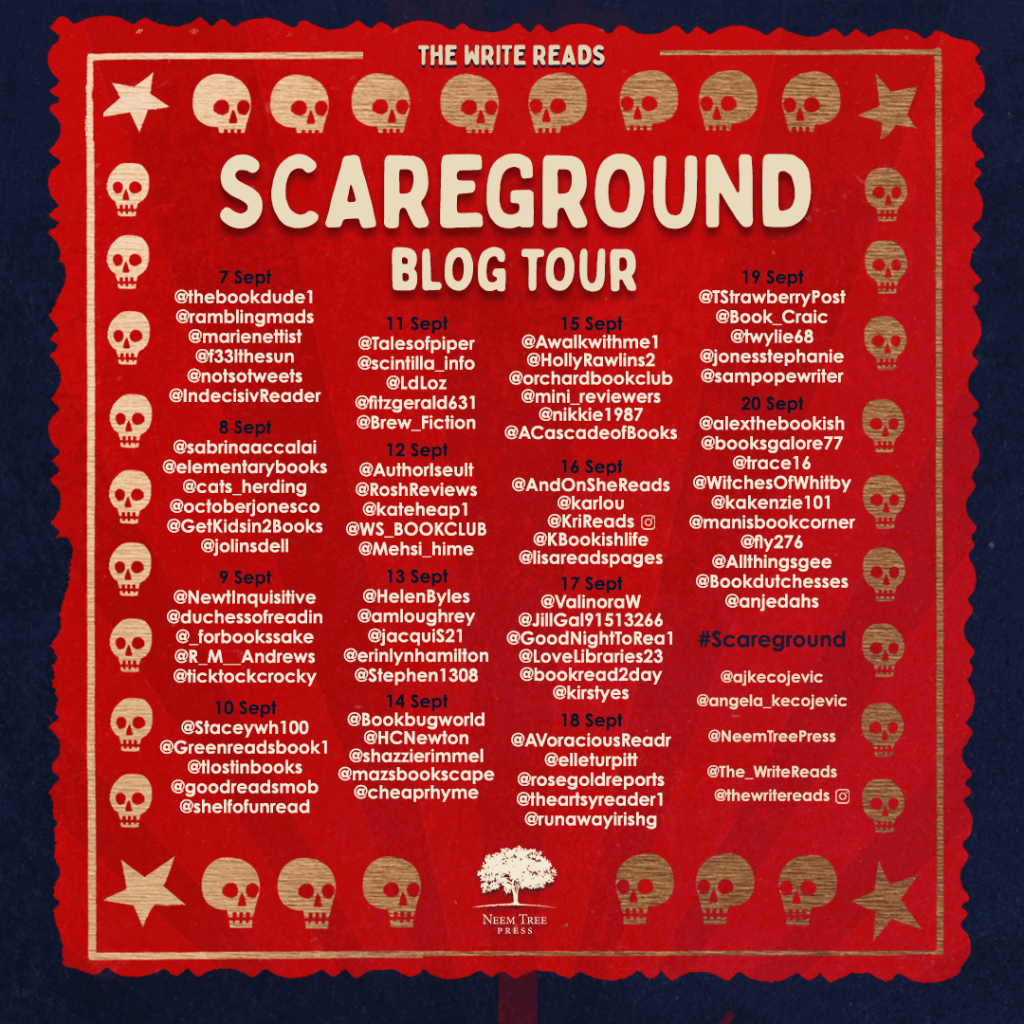
The Minstrel and The Dragon Pup by Rosemary Sutcliff

This is another one of our charity shop finds. And I know I say this about almost all of the books I discuss here, but this one really is one of my favourites.

Perhaps best known for The Eagle of the Ninth, Rosemary Sutcliff has also written a number of books about the Arthurian legends, and I feel as though The Minstrel and The Dragon Pup very much draws inspiration from these. That’s not to say that this is a stereotypical medieval fantasy story – there are no swords, or sorcery. At its core, the tale is about a singing musician who finds a dragon’s egg, hatches it, raises it, and loves the resulting dragon.

And it’s that love which makes this such a rare tale.

I’ve read a lot of fantasy over the course of my life, and I’ve found that if the gender roles of knights and damsels are challenged – and this is rarer than you’d think – that it’s done by placing women in a traditionally masculine role i.e. the Knight Alanna in Tamora Pierce’s The Song Of The Lioness Quartet.

Don’t misunderstand me – that’s brilliant too. But this is honestly the only instance I can think of – off the top of my head, in any case – in which there’s a boy in a caring role, who undertakes a quest for non-romantic love.

The plot follows The Minstrel – a young man who sings for his supper as he tours the kingdom. One day, he finds a dragon egg, just as it’s about to hatch. He cares for the dragon pup – who he names Lucky – and the two form a loving, gentle friendship. One night, though, Lucky is stolen. The Minstrel goes searching for him but to no avail. His songs become sadder and he grows hungrier. Time passes, until a chance encounter leads him to Lucky – a prisoner now in the king’s menagerie. The Minstrel then uses his skills as a song-writer, and the love he feels for his friend, to solve the king’s dilemma and win the freedom of the dragon pup.

Aside from the obvious ‘quest for the love of a friend’, this book is also unique in that the happy ending doesn’t involve vanquishing a foe – neither with violence nor with trickery. It involves healing with music. There are no villains in the work – the thief who steals Lucky is only trying to survive in a harsh world and the Minstrel doesn’t seek vengeance.

Yes, the questing hero is still male, but it feels different to the usual ‘hero saves damsel’ tale on account of the love which drives the search being parental, fraternal, and philial. It’s more Finding Nemo/Finding Dory than any usual fantasy. It deals with the family-we-choose, and I feel like in the context of a blended family, or an adopted family, that this would be a great book to use in a discussion about how kin doesn’t necessarily mean blood-relative.

The story is a gentle subversion of a whole host of fantasy tropes, and as a result, it becomes its own thing entirely.

Have you read The Minstrel and The Dragon Pup? Or any of Sutcliff’s other works? Can you think of any other fantasy stories which avoid the usual stereotypes?

As ever, I’d love to hear your recommendations.

Farn ❤